SeismicCubeSlicer
Browser-based seismic interpretation

2D and 3D seismic interpretation.
Open access.
No installation required.

Professional seismic interpretation tools that run entirely in your browser. No license fees, no installation, no IT tickets. Built for geoscientists who need results.

Choose your tool

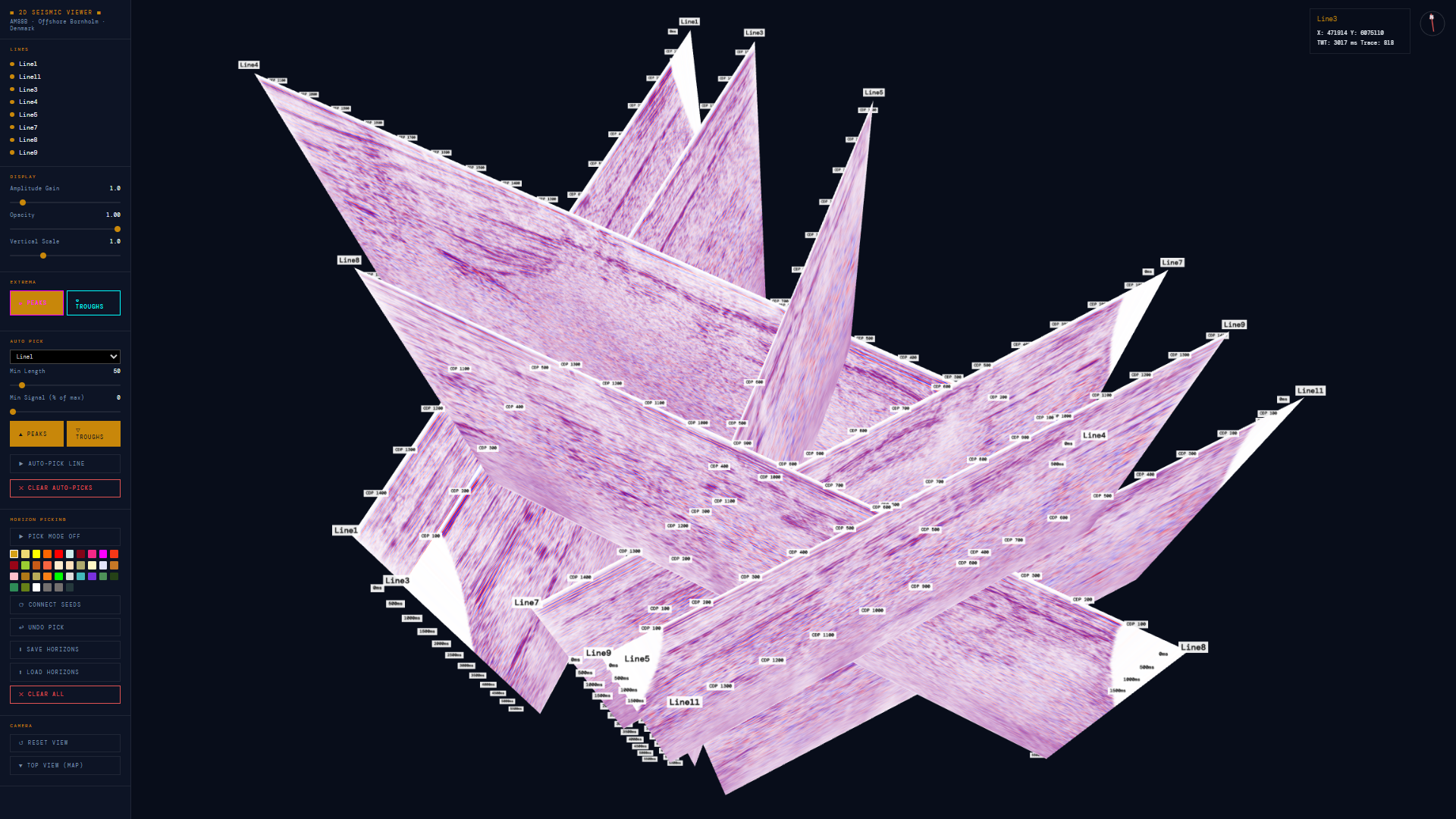
2D Seismic Viewer — AM88B fence diagram
2D Seismic Viewer
2D Line Interpretation

Load multiple 2D SEG-Y lines and view them as a fence diagram in three dimensions. Display amplitude extrema, autopick reflectors using an amplitude-guided algorithm, pick horizons and faults manually, and save picks to a standard text file.

Try the AM88B public domain survey offshore Bornholm, Denmark — or register to upload and interpret your own 2D data.
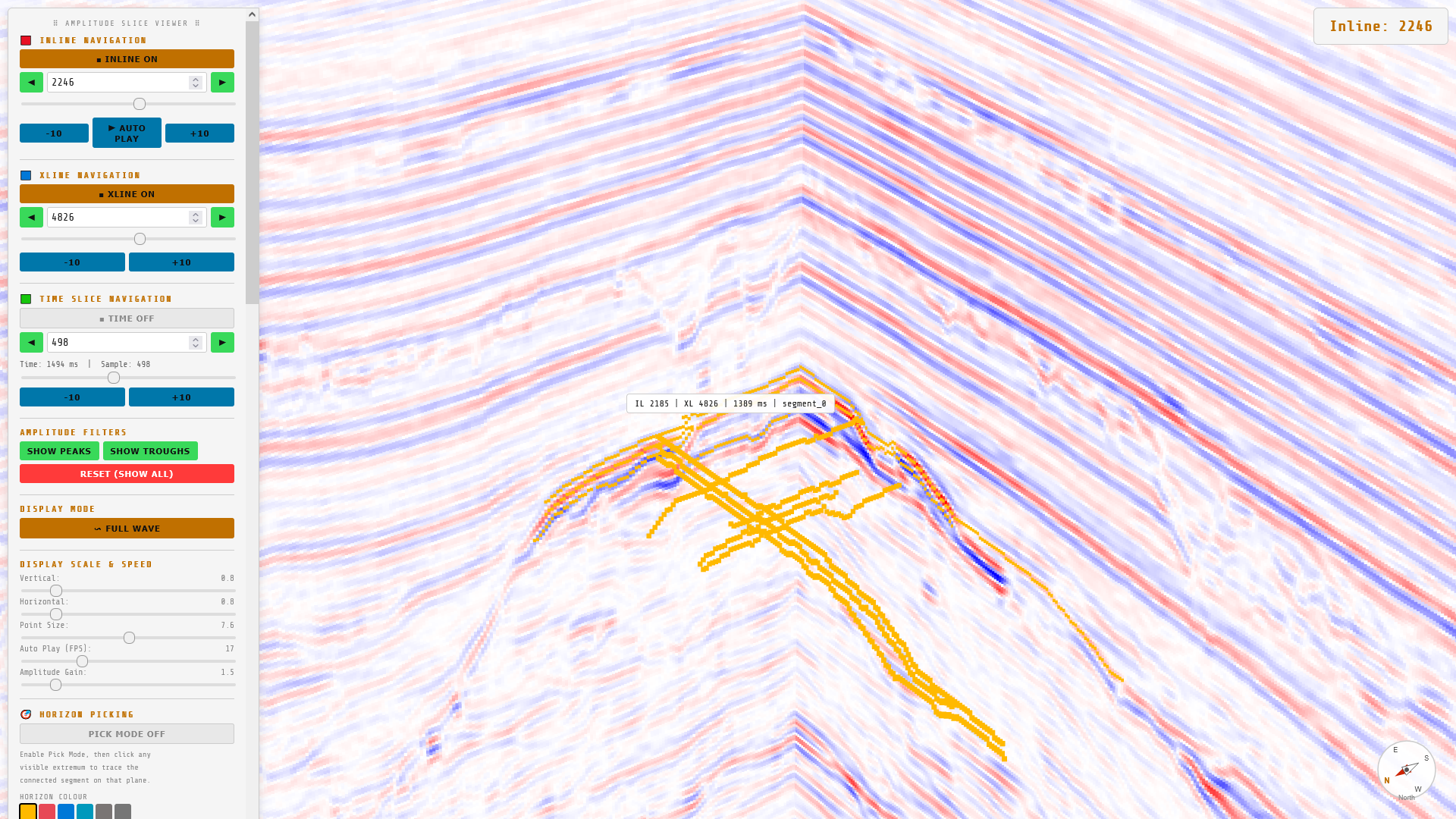
3D Seismic Cube Slicer — Parihaka
3D Seismic Cube Slicer
3D Cube Interpretation

Navigate inline, crossline and time slices of a full 3D seismic cube. Automated horizon picking with BFS algorithm. Adjustable gain, vertical scale, and display modes. Save and reload horizons between sessions.

Explore the Parihaka public domain 3D dataset from the Taranaki Basin, New Zealand — to get acclimated to the look, feel and functionality of the 3D cube slicer.

Why it exists
Most seismic interpretation tools are built for major operators with large IT budgets. Independent consultants, small exploration companies, and geoscientists evaluating acreage have been left behind. This tool exists to level that playing field.

The next discovery might come from someone who just needed a way in. No installation. No license. No barriers. Structure first. Always.

Demo datasets

Public domain · Denmark · 2D
AM88B — Offshore Bornholm

8 lines from the Danish offshore, acquired 1988. Released to the public domain by GEUS. Used for all 2D viewer demonstrations on this site.

Public domain · New Zealand · 3D
Parihaka PSTM Full Angle

923 inlines × 1,126 crosslines × 1,168 samples at 3 ms from the Taranaki Basin. High-quality benchmark dataset with clear structural closures and excellent signal-to-noise ratio.